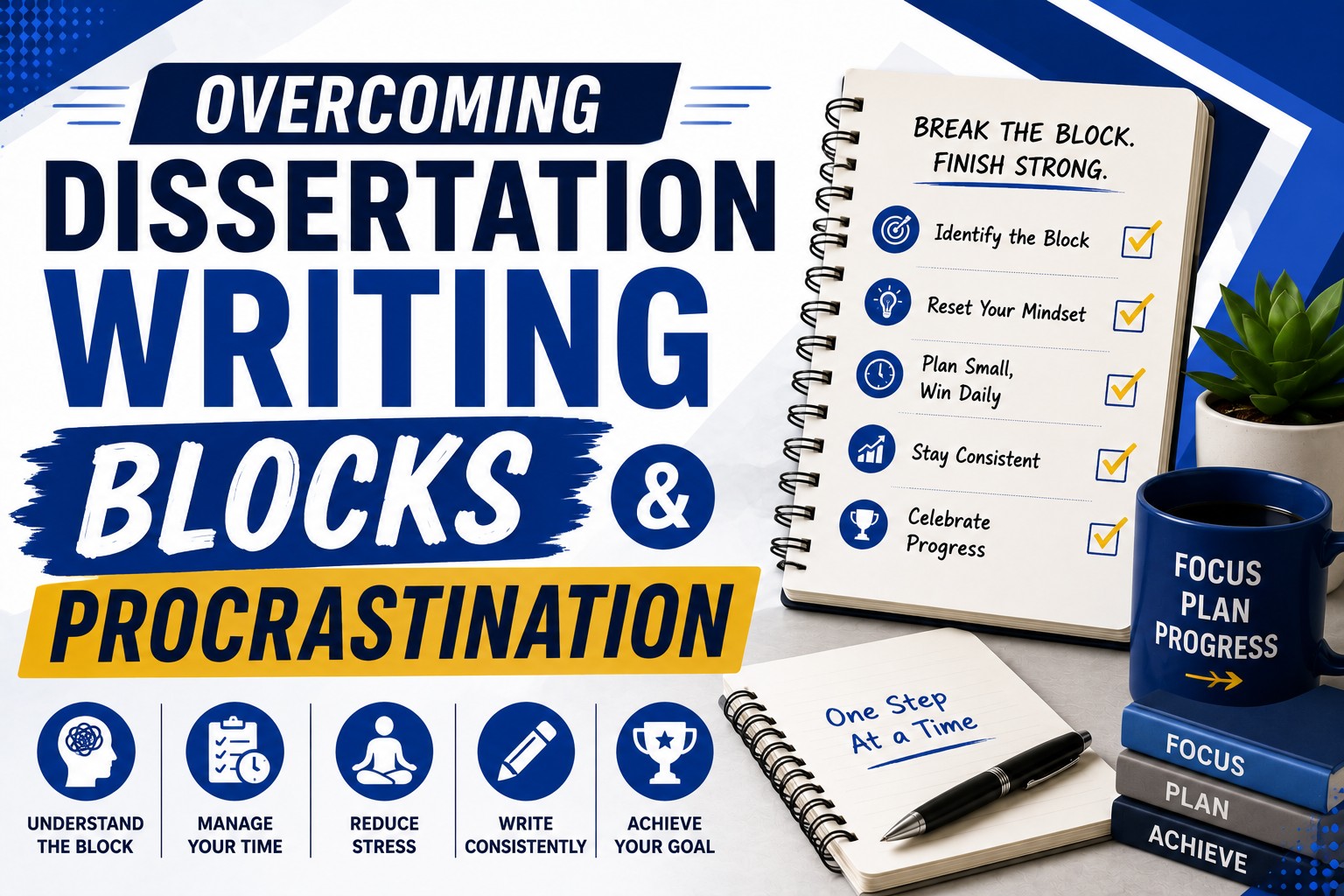
Overcoming Dissertation Writing Blocks & Procrastination
Understanding the Psychological Causes of Dissertation Stalls
Writing a doctoral dissertation or master's thesis is a marathon of intellectual endurance. Unlike short term paper assignments with immediate deadlines, a dissertation requires sustained self-directed effort over months or years. Unsurprisingly, over 50% of doctoral candidates report experiencing severe writer's block, imposter syndrome, or prolonged procrastination at some point during their candidacy.
Dissertation writer's block is rarely caused by laziness or lack of intelligence. Rather, it stems from perfectionism, fear of committee evaluation, cognitive overload, or ambiguous project scope. This guide provides actionable psychological strategies, practical writing routines, and project management tools to help you break through writing blocks and finish your degree.
1. Deconstructing Perfectionism & Imposter Syndrome
The leading driver of writing paralysis is the belief that your first draft must be flawless. Internalizing the academic mantra "A good dissertation is a done dissertation; a great dissertation is a published dissertation" liberates you from perfectionist paralysis.
The "Zero Draft" Approach
Give yourself permission to write a rough "zero draft." Do not worry about grammar, elegant transitions, or precise formatting during initial writing sessions. Separate the *creation* process from the *editing* process. Focus entirely on transferring raw ideas onto the page, knowing you will refine the text in later editing passes.
2. Productivity Systems for Academic Writing
The Modified Pomodoro Technique
Staring at a blank document for an 8-hour stretch causes cognitive fatigue. Implement structured micro-sessions:
- 45/15 Sprint: Write with complete focus for 45 minutes (no email, social media, or phone notifications), followed by a mandatory 15-minute screen-free break.
- Daily Word Count Targets: Set modest, highly achievable daily goals (e.g., 300 to 500 words per day). Hitting small daily targets consistently builds immense momentum over time.
3. Micro-Tasking & Breaking Down Large Chapters
An entry on your to-do list like "Write Chapter 4" is overwhelming and promotes procrastination. Break massive chapters down into granular, actionable micro-tasks:
Task Deconstruction Example:
Overwhelming Task: "Write Literature Review Chapter"
Micro-Tasks:
1. Draft 2-page summary of Smith (2023) active learning findings
2. Build 5-column synthesis matrix comparing qualitative STEM studies
3. Draft outline for Sub-heading 2.3 (Cognitive Load Theory)
4. Write 300 words explaining self-determination theory assumptions
4. Establishing Peer Writing Accountability
Isolation fuels procrastination. Form or join a structured dissertation writing group with graduate peers:
- Shut Up & Write Sessions: Meet in-person or virtually for 2-hour silent co-working blocks, sharing daily goals at the start and progress at the end.
- Peer Accountability Check-ins: Pair up with a writing partner and send weekly progress updates every Friday afternoon.
Summary & Anti-Procrastination Checklist
Overcoming writer's block requires shifting from perfectionism to process-driven habits. By embracing zero drafts, committing to modest daily word count targets, micro-tasking chapter outlines, and working with peer accountability groups, you can maintain steady momentum toward completing your dissertation.
Managing Burnout & Academic Mental Health
Prolonged dissertation stress can escalate into chronic academic burnout, characterized by emotional exhaustion, depersonalization, and reduced personal accomplishment. Prioritizing mental health is not a luxury—it is an essential requirement for research productivity.
- Enforce Strict Work-Life Boundaries: Establish non-negotiable writing stop times each evening and take at least one full day off per week to recharge.
- Utilize University Counseling & Writing Centers: Seek professional support from graduate student wellness services or academic writing coaches when feeling overwhelmed.
Designing a Dedicated Academic Writing Sanctuary
Your physical and digital writing environment significantly impacts cognitive focus. Design a dedicated workspace free from environmental distractions. Use site-blocking applications (like Freedom, Cold Turkey, or Forest) to block distracting websites during writing blocks, and use noise-canceling headphones with ambient audio to maintain deep focus.
Developing a Sustainable Long-Term Academic Writing Routine
Transitioning from sporadic marathon writing sessions to a consistent, daily writing habit is the most effective antidote to dissertation procrastination. Treat writing as a non-negotiable professional appointment. Schedule dedicated 1- to 2-hour writing blocks in your calendar during your peak cognitive energy hours (e.g., early morning or afternoon) and protect that time fiercely against non-urgent emails or administrative distractions.
Maintain a writing log to track daily word counts, completed tasks, and reflective notes on challenges encountered. Celebrating small daily milestones reinforces positive psychological feedback loops, reduces writing anxiety, and builds steady momentum toward completing your entire dissertation manuscript.
Utilizing University Writing Centers & Dissertation Bootcamps
Take full advantage of campus resources designed specifically for graduate students. Most universities offer intensive 3-day or 5-day Dissertation Writing Bootcamps that provide quiet space, structured writing blocks, and individual consultations with professional writing specialists. Working alongside fellow graduate students facing similar challenges fosters community and accountability.